
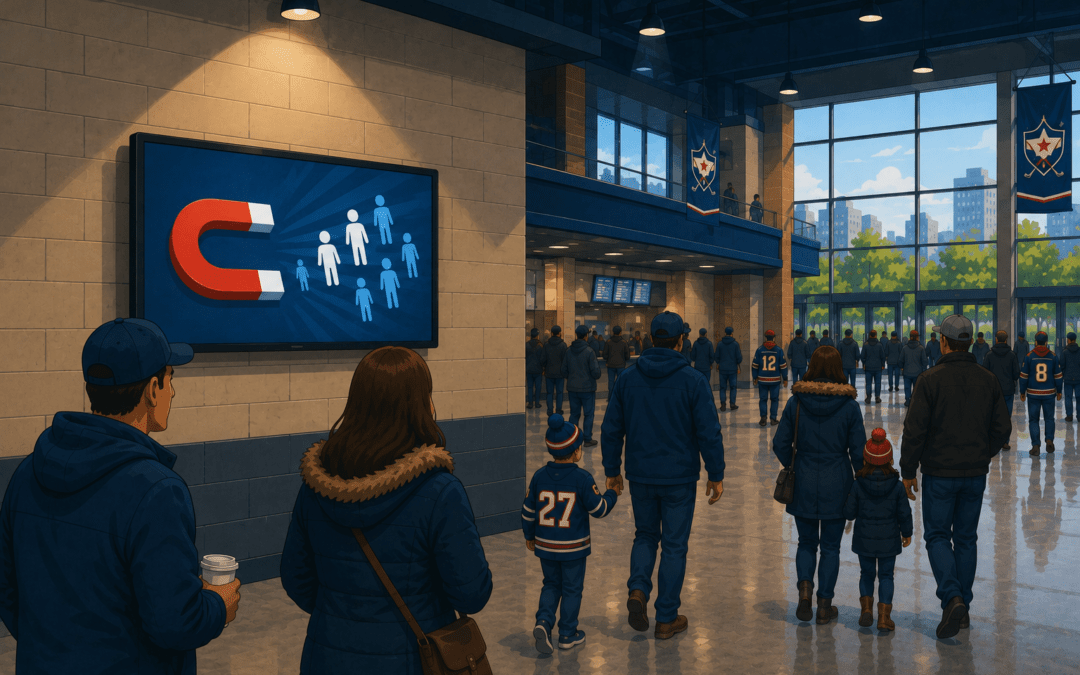
A cheap impression is only efficient if it has a chance to matter. That is the problem with relying on CPMs and media efficiency metrics alone. Write an article about why audience attention, contextual relevance and real-world media environments may matter more than CPMs and media efficiency metrics alone, and you quickly get to a simple truth: people do not experience media as a spreadsheet. They experience it in moments, routines, and places that shape how messages are noticed and remembered.
For advertisers, this changes the planning conversation. A low CPM can look strong in a report while delivering weak real-world attention, limited recall, and little connection to the setting or mindset of the audience. Media planning works better when cost is balanced against context, dwell time, repeat exposure, and the environment surrounding the message.
Why efficiency metrics can miss what actually drives effectiveness
CPM is useful. It helps buyers compare inventory at scale. But CPM is a buying metric, not a full measure of advertising effectiveness. It tells you what it costs to reach a thousand impressions, not whether those impressions happened in a trusted setting, during a receptive moment, or with enough attention to influence memory.
That distinction matters more than ever. Consumers are overloaded with digital ads, fragmented across platforms, and increasingly conditioned to scroll, skip, mute, and ignore. In that environment, efficient delivery does not always equal effective communication. The question is not just how cheaply media can be bought. It is whether the environment gives the brand a fair chance to land.
Contextual advertising works because behavior shapes attention
Contextual advertising has always been stronger when it reflects what people are doing, where they are, and why they are there. In participation environments, that alignment is built in. Arenas, recreation facilities, sports complexes, and tournament venues are not passive spaces. They are environments where families, athletes, coaches, and spectators are actively engaged in routines that repeat week after week.
That routine behavior creates a more valuable kind of frequency. A parent bringing a child to hockey three times a week is not a random exposure opportunity. It is a pattern. A team arriving for a weekend tournament is not just traffic. It is concentrated dwell time, shared attention, and a high-energy environment where brands can become part of the experience.
This is where community advertising becomes strategically different from broad-reach media. The audience is not just present. They are participating. They are emotionally invested. They are spending time on site. That changes how advertising is seen.
Real-world media environments create better conditions for memory
Real-world attention is different from digital visibility. Inside place-based media and digital out-of-home advertising environments, there is no thumb moving past the message in half a second. There is no competing tab, skipped pre-roll, or shrinking mobile attention span. There is time. There is physical presence. There is often repeat visitation.
In community venues, audiences commonly remain on site for 90 minutes or more. That matters because advertising effectiveness improves when exposure happens in high-dwell settings where messages can be absorbed naturally over time. The environment itself supports attention.
It also supports brand building. Brands grow through repeated, meaningful exposure, not just immediate clicks. When a message appears consistently in trusted local spaces, it gains familiarity. When it shows up around participation, movement, and community life, it gains emotional relevance. That is hard to replicate in low-attention channels, even when those channels look efficient on paper.
Arenas and sports venues are not just locations. They are participation environments.
Arenas, recreation centres, sports complexes, and tournament venues offer something many media channels cannot: shared experience. People arrive with purpose. They come back often. They spend time waiting, watching, socializing, and moving through the space. Those conditions make audience engagement more likely because the ad exists within lived experience rather than beside it.
For local businesses, that means stronger community presence. The brand is seen where community actually gathers. For national advertisers, it creates local relevance at scale, with the ability to show up across multiple markets in environments that feel trusted and familiar rather than generic.
This is also why digital out-of-home and place-based media can serve as the missing and complementary layer in planning. They do not need to replace other channels to be valuable. They strengthen broader campaigns by extending video and brand messaging into physical environments where consumers are present, attentive, and connected to the setting.
Better media planning asks better questions
Smarter media planning looks beyond surface efficiency and asks: Was the audience in the right mindset? Was the environment aligned with the brand? Did the message appear in a place people trust? Was there enough dwell time and repeat exposure to build memory?
Those questions lead to better decisions than CPM alone. They shift attention from cheap delivery to meaningful delivery. That is especially important for brands trying to build consideration, local familiarity, and top-of-mind awareness over time.
Sports Digital Network is built around that logic: real-world media environments where participation happens, attention is stronger, and community presence becomes part of the value. Because the best media plans do not just find audiences. They meet them where life is actually happening.
Estimated reading time: 5 minutes